

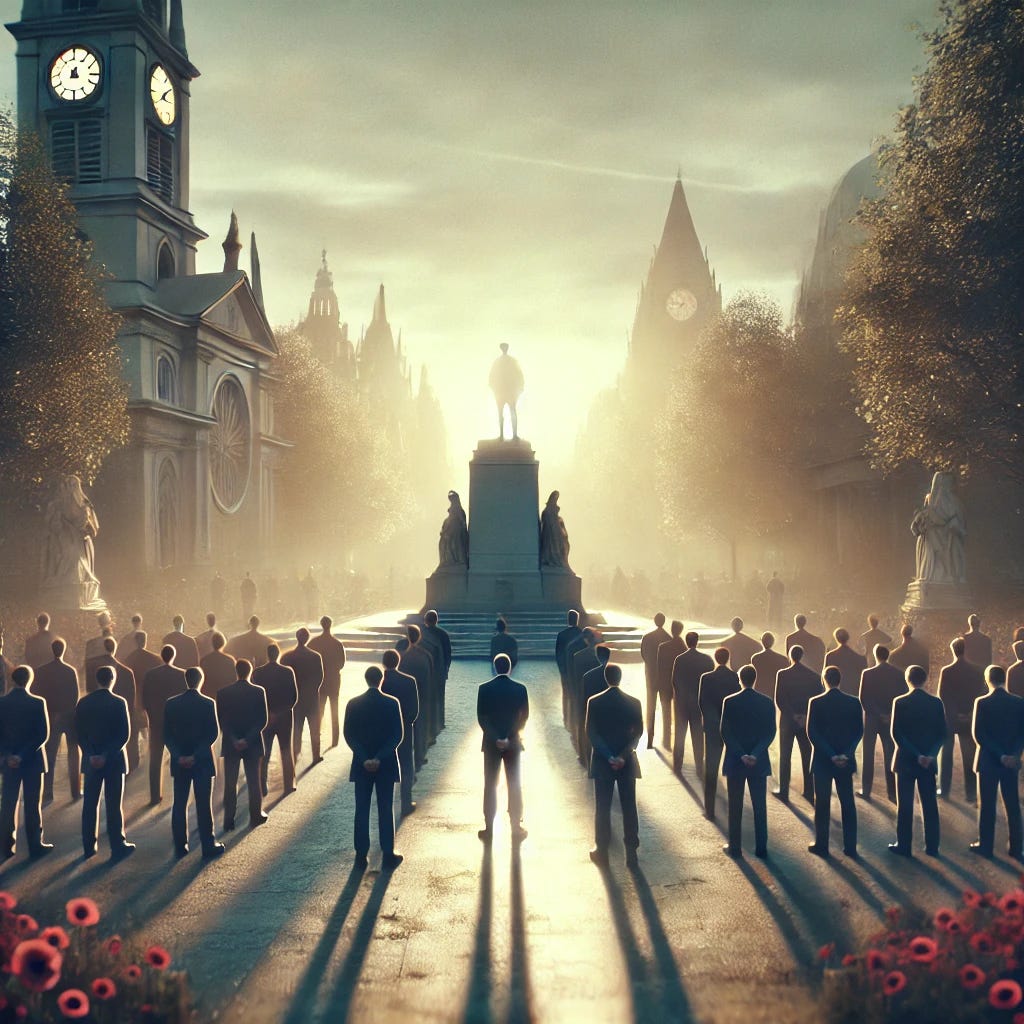
The untimely death of a colleague and the subsequent condolence meeting led me to think about the significance of the 2-minute silence. Why 2? Why not 1 or 3? This practice to honor someone who has died, particularly in the context of mass casualties or significant figures, can be traced back to several key historical events. The tradition as we know it today largely emanates from World War I, evolving into a symbolic ritual to pay respect to the fallen.
Origin in World War I
The concept of a moment of silence for the deceased became widely recognized in the aftermath of World War I. The idea of pausing to honor the dead first gained official recognition on November 11, 1919, marking the first anniversary of the Armistice that ended World War I, known as Armistice Day.
The practice is often attributed to Sir Percy Fitzpatrick, a South African author and politician. During World War I, there were already local practices of observing silence in South Africa to honor soldiers who died in combat. Fitzpatrick proposed the idea of a two-minute silence to King George V of the United Kingdom as a way to honor the war dead.
On November 7, 1919, King George V made a proclamation to the British Empire, calling for a two-minute silence at 11 a.m. on Armistice Day, to mark the hour when the guns of World War I fell silent. He expressed that:
"All locomotion should cease, so that, in perfect stillness, the thoughts of everyone may be concentrated on reverent remembrance of the glorious dead."
On November 11, 1919, people across the British Empire observed the first two-minute silence. Trains halted, workplaces paused, and the entire nation stood still to reflect on the sacrifices made during the war. It became a powerful collective moment of remembrance, and the tradition quickly gained a deep cultural significance.
Earlier Practices and Influences
Cape Town’s Noon Day Pause: Before the global adoption of the two-minute silence, a similar practice took place in Cape Town, South Africa. The tradition involved a daily three-minute pause after the firing of the Noon Day Gun, which began as a way to remember those who were fighting and those who had died during the war. This practice is believed to have influenced Sir Percy Fitzpatrick’s suggestion.
Moment of Silence in Various Cultures: Although the World War I commemoration was the first widespread instance of observing a formal two-minute silence, similar practices had existed in many cultures for centuries. The idea of maintaining silence to show respect for the deceased or to reflect on loss is a common tradition across cultures, though it may vary in duration and purpose.
Symbolism and Evolution
Symbolism of the Two Minutes: The two-minute duration was chosen to represent different aspects of remembrance. The first minute was dedicated to the fallen soldiers, while the second minute was meant for the families left behind—those who bore the emotional cost of the loss.
Global Adoption: The practice of observing moments of silence spread beyond the British Empire. It became common not only on Armistice Day but also for other significant occasions. The duration of silence could vary (e.g., one minute or two minutes), but the essence remained the same: a collective pause to honor and remember.
Use for Prominent Deaths and Tragic Events: Over time, the two-minute silence has been used to honor the death of prominent individuals and in response to significant tragedies, such as natural disasters, terrorist attacks, or accidents. It symbolizes a shared moment of grief and respect for those who have passed away, regardless of their nationality or the nature of their death.
Examples of Modern Observances
Remembrance Day (November 11): Today, the two-minute silence is still widely observed on Remembrance Day (or Veterans Day in the United States) to honor those who died in the line of duty during conflicts. At 11 a.m., people stop their activities to pay their respects to those who have served and sacrificed.
Tributes for Public Figures: The two-minute silence is also observed to mark the death of prominent public figures. For instance, moments of silence were observed globally upon the deaths of leaders like Nelson Mandela and Queen Elizabeth II, highlighting the profound impact of their lives.
The tradition of the two-minute silence as a gesture of respect and reflection on the death of someone emanated from the somber context of World War I and the desire to collectively remember the sacrifices made during the war. Proposed by Sir Percy Fitzpatrick and endorsed by King George V, the practice quickly became a significant commemorative ritual. It has since evolved into a universal gesture to honor not only the war dead but also the passing of important figures and the victims of tragedies, reflecting a shared humanity in times of loss.